
In February of 2026, Winter Wheat, a real estate development and consulting firm, presented Louisville Community Grocery owners with comprehensive research, case examples, and partner insights to determine how to move forward sustainably. Here is the second of three case studies chosen for the presentation from over 30 co-ops studied nationwide based on location, scale, population served, and demographic data.
Author: Arte Chambers
-
Winter Wheat Helps LCG Move Forward
In February of 2026, Winter Wheat, a real estate development and consulting firm, presented Louisville Community Grocery owners with comprehensive research, case examples, and partner insights to determine how to move forward sustainably. Here is the first of three case studies chosen for the presentation from over 30 co-ops studied nationwide based on location, scale, population served, and demographic data.
-
Let’s Generate Food & Income for LCG
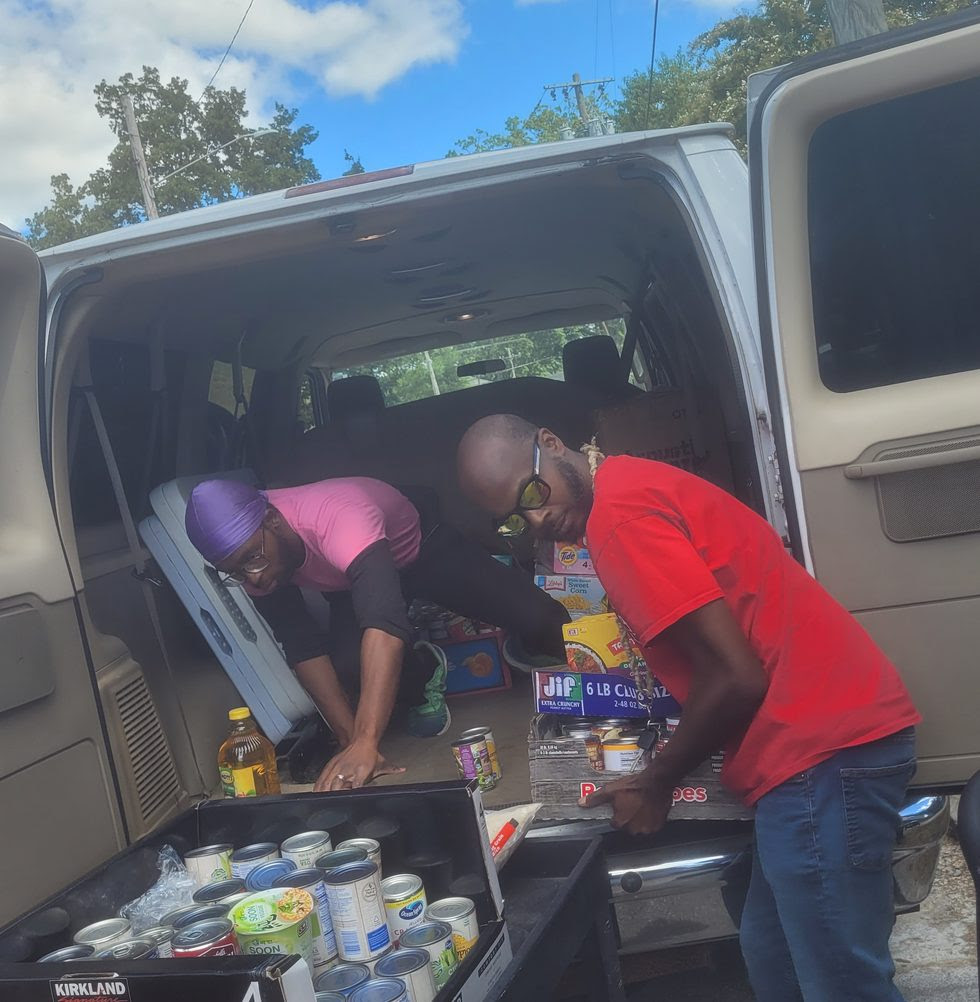
The top level of our Co-op, our board of directors, is run by volunteers. It is our foundational belief that cooperative economics can lift communities out of poverty. As we advance our goals to build a community owned grocery, we are faced with the question, “How do we value the work?”
We are finding that there are both legal and practical limitations to free work for our Co-op. Legally, being a for-profit Limited Cooperative Association in Kentucky limits the number and kinds of volunteer hours allowed. Practically, many of us have had to tighten purses and pick up more hours just to survive daily, making additional volunteer hours daunting. While our methodologies for generating food and income for the community are currently in their infancy, our resources to generate food and income are tangible.
Building from nothing is a way of life for many of us in this Co-op and our Co-op is a step past nothing. Our Co-op has access to retail space, business licensure, professional accounting, produce distributors, and political support. We have the resources to tap into generating income with the co-op. The Next Step is joining the conversation on Louisville Community Grocery’s food buying club and begin with a feasibility study on how we can take action that will begin our generative food Co-op. Fill in the Google form today.
By Arte Chambers
Edited by Michelle Lori
-

Recap of July 18 Owners Meeting
Sixteen owners attended the July 18, 2026 Owners Gathering and Meeting. We began by enjoying delicious food from Caked Up Ent Catering of Louisville. Board member Judy S opened the business meeting by inviting veteran owners to talk about LCG co-op organizing and what has worked in the past. Owners shared the following positive experiences from past years:
- commitment, discipline, consistency among board members and owners
- a sense of community, a sense of shared purpose in working together to open a cooperatively owned grocery store
- specific ways to enter the work
Next, those present offered the following areas that need improvement now:
- need to set strategic goals for engaging current owners over the next year
- need more informal fellowship times to build community and trust
- need to implement the onboarding process developed by the Ownership & Outreach Committee for owners to become involved
- need tangible ways for owners to contribute time as organizers and as “worker bees”
- need a database to collect owner information and a dedicated volunteer to keep it updated
- need a way for prospective owners to join and if technology is a hurdle then consider simpler ways (i.e. cash or check)
- we may need to reconsider the role of owners – not just as investors, but active members
Judy then summarized the options MK Lindsey of Winter Wheat presented at the February Owners Meeting regarding the case studies she researched and LCG’s possible way forward:
- closure & dissolving assets for the benefit of a like-minded project;
- partnering with a like-minded project or partner;
- re-organizing better.
For the next hour we had a panel discussion with Barry Z., owner and former member of a food buying club, and Birch Bragg, owner of LOCALS in Louisville and Frankfort.
Barry talked about his experience as a buying club member in the 1970s at another co-op. He shared about the various jobs the co-op members would do as part of the buying club, such as contacting farmers to find out what they had for the coming week, picking up produce from the farmers and bringing it to the distribution site, bagging the grocery items for the buying club members to pick up, managing the orders and handling the money. Barry noted that courts closed many co-ops in the late 70s due to not paying members for their work which became a violation of the new employment tax laws. This raises awareness for us about our business model as we consider opening a buying club as a Limited Cooperative Association (LCA) in Kentucky.
Birch discussed his business endeavors beginning with forming a Bowling Green community supported agriculture (CSA) to get farmers’ food in people’s hands. He has since expanded to a grocery store model with a restaurant component. He noted that the restaurant stabilizes the grocery business. Birch offered to share information and resources when LCG is ready to discuss. He suggested contacting Kentucky Department of Agriculture’s cabinet for grants and answers to business questions.
After a stretch break, we agreed that LCG would need to have at least 15 owners commit to joining a buying club working group for the project to continue to be developed. We will spend the next few weeks sounding a call for owners to step up. If we do not get 15 owners to commit, we will let the buying club project go.
We continued to discuss what a food buying club working group would be tasked to do:
- First priority is to learn the legality of owners volunteering to run the buying club for the LCA; if this is not possible, how many employees would be needed?
- Starting from scratch. We need to make a timeline for the buying club.
- Finances. We need to make a business plan; initial capital for equipment, funding for supplies
- Product. We have a buying club survey with over 50 responses indicating top priorities for owners interested in joining a food buying club.
- Location. The Kling Center has offered space and refrigeration.
- Operations. Staffing – employees and volunteers
There was some concern around a food buying club being for “subscribers” only vs. open to the public. Does this line up with our purpose? Will this turn people away from LCG if they cannot become regular subscribers to a buying club? A hybrid version with subscribers and walk-up sales was suggested as well.
Action: Lead Team (Abby L, Judy S, Carrie V, Barry Z, and Carlos N.) will commit to the buying club working group. We need 10 more owners to join these leaders. A poll will go out in our e-news and voice messages asking for owners to choose a meeting time in August for the first organizational meeting. These dates are August 5, 19, 26, and 27 at 6:30 – 8:00 PM.
-

Let’s Start Selling as Louisville Community Grocery
LCG owners agree that we want to begin engaging in the business of selling fresh, high quality food and other products in a cooperative manner that is responsive to community needs, and support the regional food economy (one of our core purposes). We want to start now, while we are still working on opening our brick and mortar store. A buying club project has risen to the top in recent owner meeting discussions as a desirable way to start achieving this objective.
The Buying Club Survey
Owner, Barry Z. created a 2-question survey and we’ve had 43 responses from owners who would like to participate in a buying club. Can you help us get to 70? We’re learning from the survey what your top 3 criteria are for participating, and what products you would be most interested in purchasing. This helps a great deal to plan a prototype for a buying club.
Develop Our Cooperative Business Model
We’re at a catch-22 with the prospect of opening our brick and mortar store. If our Business and Site Development Committee finds the right place and the willing partners to get started, we will need to have a team ready to take on the work to make it happen. This is why we need to start now to develop our cooperative business model through practical sales so we’ll be ready.
Our Purpose
- Combat food insecurity;
- Operate a multi-stakeholder, Cooperative grocery store;
- Engage in the business of selling fresh, high quality food and other products in a Cooperative manner that is responsive to community needs and supports the regional food economy;
- Develop an attractive and successful business model for worker and community ownership in food retailing and local economic development;
- Create jobs that are secure and educational and support the dignity of all workers of the Cooperative; and
- Engage in education
Coordinators Needed
To move this project forward and start learning new insights into what will work on a larger scale, LCG needs one or two volunteer coordinators for the project. This would involve the following tasks and time commitment:
- Set up and facilitate working group meetings once or twice per month in person or online, or both;
- Commit to one year as project coordinator or co-coordinator;
- Set a goal for a start date for a buyers club or other prototype for sales;
- Coordinate the operation of the sales prototype for a period of 3 months and evaluate;
- Delegate work to group members such as
- Drafting a committee charter with the group, to be approved by the LCG board of directors;
- Recording meeting notes and posting to the LCG Google drive;
- Attending monthly LCG board meetings to report on the progress, ask and answer questions;
- Liaising with the Business Development and Site Selection committee as insights become clear about what will work on a larger scale;
-

New Projects Brewing
At our March 19th owners’ meeting, a small group of Louisville Community Grocery (LCG) owners volunteered to explore ways that LCG could start selling groceries before we build a store. One way is a “buying club,” which has a small space for receiving, storing, and distributing food but
not an actual storefront. For example, a buying club might accept food orders from its members every Wednesday (in person or online) and distribute the food on Friday. A buying club usually serves only its member-owners, and not the general public. Starting a buying club could be a
low-cost, low-risk way for LCG to grow into a full-service grocery store. It would help us learn the items to stock in the store, the payment methods that our community prefers, and other things that will make our owners and community members happy to shop at LCG.The LCG Buying Club Working Group is putting together a proposal to bring to the LCG Board for approval. We would start the buying club as an experiment, with the intention of improving and expanding it as we go. We will ask for your suggestions and concerns every step of the way. To help us get started, please answer a quick 2-question survey. Thank you!
If you would like to join the LCG Buying Club Working Group, please contact Arte Chambers at LouisvilleCommunityGrocery@gmail.com. -
Special Projects kicking off: Impact Economics and Teamwork
At our last owners meal and meeting we asked members what kind of LCG special projects they would be willing to invest their time into. A couple of workgroups formed discussing a community impact type event and a co-op owned buyers club.
Some of the topics discussed within the community impact group were
Community Gardening
Community enrichment
Potlucks
Fellowship
We are looking for an owner volunteer to take the lead on continuing these conversations. If this is you contact Arte at louisvillecommunitygrocery@gmail.com to get plugged in.
Some of the topics discussed within the buyers club workgroup were
Engaging with food vendors
Delivery
Group buying power
Buying selling groceries now
LCG Owner Barry Z. has begun conversations within the groups online message board. Check this message from Barry:
I want to seed the conversation with a few ideas and give you all a chance to approve, reject, revise, or replace them before I start writing in more detail.
I am thinking in terms of a “soft launch” for LCG, which might take the form of a buying club and may take another form that involves establishing accounts with one or more food suppliers, selling food and perhaps other items on a regular schedule, getting LCG members involved, and spreading the word that we exist and are working toward a full-scale local grocery.
-Barry Z
https://groups.google.com/g/lcg-buying-club/c/ulaNX-KYxZM/m/D8c-1m4GAgAJ
If you would like to join the conversation send Arte an email at louisvillecommunitygrocery@gmail.com
These are exciting times for the co-op. Your response to our hard work has truly been inspiring. I for one am feeling charged up and capable of solving our communities food access issues.
Thank you again for you time
-Arte
-

LCG Tech Update
LCG tech projects are going pretty well. We have been making regular updates to our “Cooler Blog”. This site is built on the WordPress platform, which was chosen because it is open source and user friendly. The co-op needs volunteers to help with posting articles to our blog. Ideally tech savvy volunteers who are willing to learn the platform and respond to board and committee post requests.
Currently the co-op would like to clean up its web domains and set them up so that we can create email addresses like Board_President@louisvillecommunitygrocery.com. We own a few other web domains as well. We would like to coral all of them under one domain registrar. We are looking for any owner volunteers who may have these skill sets to assist in planning for this project.
If you are interested in volunteering and getting hands on in the development of LCG’s tech platform consider joining the LCG Tech Crew. This group operates primarily remotely and is responsible for solving the technology needs for the co-op. Send a message to Arte at louisvillecommunitygrocery@gmail.com if you are interested in volunteering for any of these projects or to join the LCG Tech Crew.
-Thanks
Arte
-
Why has it taken so long to open the Louisville Community Grocery?
Our co-founders began meeting in the Portland neighborhood in the fall of
2015 and founded LACE in 2017. Organizing meetings moved around
neighborhoods as they wanted to connect with residents who had been
affected by recently closed grocery stores (from 2016 to 2018, five stores
closed within the Watterson/city core), then landed in Russell for a while. We
incorporated the LCG in 2019 and kicked off a soft launch owners campaign. We organized into committees with LACE members to conduct the work of
our co-op. COVID-19 affected our ability to host our monthly in-person
owners’ meetings, and we didn’t return to that. Nevertheless, the work
continued.Over the fall of 2021 and spring of 2022, we secured philanthropic funding
for LACE and predevelopment activities, land from the Community
Foundation of Louisville, and a $3.5M bond issuance from Louisville Metro
Government. Co-founder of LACE and LCG, Cassia Herron, resigned as
LACE’s board chair in the fall of 2021 and soon after, LACE hired executive
staff to oversee its mission, and the two entities began having problems.LACE did not follow the plans Herron left to guide the efforts to develop the
land, build the business, and engage residents and owners in the process, and began going at the work alone. By 2023 the relationship between our co- op’s leadership and LACE had completely fallen apart and officially ended in
2024.
In 2024, our newly elected board and a handful of owners worked to regain
access to the co-op’s assets created with LACE that LACE retained control
of when the partnership dissolved. We conducted an updated market study
that maintained the property at Finzer was still the best property to pursue for
our store (along with a Louisville Metro Housing Association property in
Russell). In 2025, we learned that the Finzer site was acquired by the
Smoketown Community Land Trust. When we approached them about
building our grocery store there, they indicated they were not yet ready to
make a decision about how to use the property.
In 2025, LCG was awarded a grant for research regarding our future site. This
research was completed and shared with the LCG ownership at the February
2026 Owners Meeting. We are currently considering options for how to move
forward. -

Owners Meal & Meeting 2/19/2026
Quick recap
The meeting was well attended and focused on discussing the future of Louisville Community Grocery (LCG), a cooperative grocery initiative, following the dissolution of its partnership with LACE. MK Lindsey presented case studies of successful food co-ops across the country, highlighting different business models and operational approaches. The group explored four potential paths forward: transferring operations to another entity, finding a developer for property development, establishing a food hub/distribution center, or continuing with the current mission. Roger Quinn, president of the Arthur Kling Old Louisville Community Center, offered his facility as a potential location for a food hub operation. The conversation ended with discussions about Board membership expansion and the need for continued owner engagement through 4 active committees, with door prizes awarded to several attendees.
Summary
Cooperative Enterprise Financial Stability
The meeting focused on the financial status and future steps for a cooperative enterprise. The Board reported that the LCG finances are stable for at least two years. The lenders have expressed confidence in the group’s mission, allowing them to manage the funds responsibly. The discussion also touched on the importance of community representation and the need for sustainable strategies to achieve their goals.
Co-op Leadership and Development Updates
The Board discussed the need for a finance chair to support the new treasurer and emphasized the importance of financial oversight for the co-op’s credibility. They also highlighted the need for a co-op owner to take on the role of Board secretary. They mentioned the ongoing survey about the co-op’s future, which remains split between two options, and encouraged attendees to consider alternative paths forward. They concluded by introducing the Site Selection and Business Development Committees’ work, noting their shift from focusing on the Finzer property to exploring new options due to delays in the Smoketown Community Land Trust’s development plans.
Co-op Grocery Store Insights
The meeting focused on a presentation by MK Lindsey, who shared insights from her research on co-op grocery stores, including a case study of the Dorchester Food Co-op in Boston. Lindsey highlighted the co-op’s demographic alignment with the group’s target areas, its lease model, and the challenges of long-term rent increases. She also discussed the co-op’s investment in infrastructure, such as walk-in coolers, and its reliance on grants, community investment, and traditional debt financing. The presentation concluded with a reflection on the Dorchester’s regret of not implementing pickup and delivery services earlier, which they felt was costing them revenue.
MK Lindsey presented three case studies: a co-op that faced financial challenges but was stabilized by a 10-year grant, Weaver Street Market in North Carolina which achieved significant scale through vertical integration and community-focused practices, and Eastside Food Co-op in Minneapolis which doubled in size through a successful expansion. The discussion highlighted key factors for success including member capital, strong partnerships, careful site selection, and community engagement.
Grocery Store Development Strategy
The Board presented a strengths/weakness/opportunities/threats (SWOT) analysis highlighting opportunities such as new grocery stores in The Highlands in Louisville, as well as potential partnerships with housing authorities and local farmers. However, challenges were also noted, including the complexity of real estate deals and the need to determine store operations and staffing. The group also reviewed their timeline since 2015, including past negotiations with Louisville Metro Government for bond funding and their current efforts to move forward after dissolving a partnership with LACE.
Community Grocery Initiative Future Plans
The meeting focused on discussing the future of LCG, exploring various paths forward including partnering with a community center, continuing development of a brick-and-mortar store, or creating a food hub. The group discussed the possibility of using the Arthur Kling Old Louisville Community Center’s basement space as a temporary location, with the Center’s president offering to provide the space on a revenue-sharing model. The conversation ended with announcements about the upcoming Ownership and Outreach committee meeting on March 2nd by Zoom, Board membership roles open (seeking 5), and a call for volunteers to help with fruit tree pruning in community gardens (Reach out to Amanda for more information).
Please contact LouisvilleCommunityGrocery@gmail.com with questions, to volunteer, and to receive calendar invitations to upcoming committee meetings.